

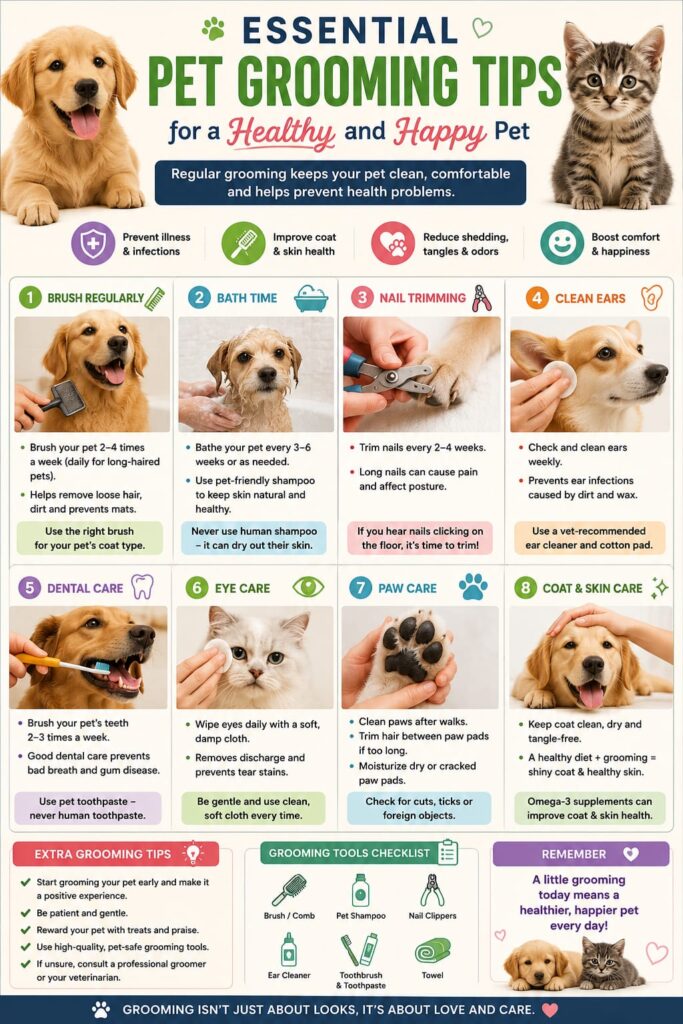
Keeping your pet Grooming Tips clean and well-groomed is one of the most important aspects of responsible pet care. Pet Grooming Tips can help maintain your pet’s overall health, prevent common skin and coat problems, and improve their comfort and happiness. Regular grooming not only keeps your dog or cat looking their best but also allows you to detect early signs of health issues such as skin infections, parasites, lumps, or injuries.
From brushing and bathing to nail trimming and ear cleaning, a consistent grooming routine supports your pet’s physical well-being and strengthens the bond between you and your furry companion. Whether you are a new pet owner or an experienced one, following the right Pet Grooming Tips can make grooming a positive and stress-free experience for both you and your pet.
In this guide, you’ll discover essential grooming practices that will help keep your pet healthy, comfortable, and happy throughout every stage of life.
Pets Grooming Tips ; are cherished members of our families, and their health is just as important as our own. As pet Grooming Tips owners, we always want our to be happy Compassionate care for your furry friends and healthy. However, unlike humans, pets Grooming Tips. cannot tell us when they are feeling sick or experiencing pain. They often hide signs of illness, making it difficult to know when something is wrong.
While some health issues can wait for a regular veterinary appointment, others require immediate medical attention. Recognizing the warning signs early can make a significant difference in your pet’s Pets Grooming Tips recovery and overall well-being. Delaying Pet Grooming Tips treatment may allow a minor issue to become a serious health emergency.
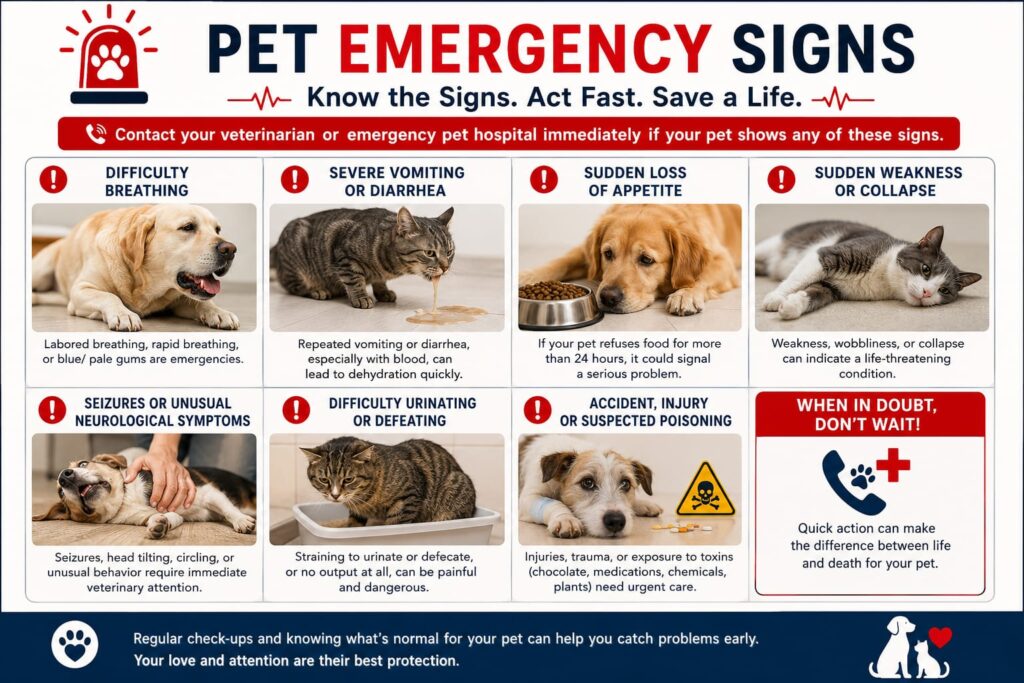
Understanding the symptoms that require urgent veterinary care Pet Grooming Tips helps pet owners act quickly and confidently Pet Grooming Tips during stressful situations. In this article, we will discuss seven important signs that indicate your pet Grooming Tips may need immediate veterinary attention and explain why prompt Pet Grooming Services and medical care is essential.
- Difficulty Breathing
One of the most serious signs of a medical emergency in pets Grooming Tips is difficulty breathing. Normal breathing should be quiet and effortless. If your pet Grooming Tips is struggling to breathe, it should never be ignored.
Common Symptoms
Rapid breathing
Wheezing
Excessive panting without exercise
Open-mouth breathing in cats
Blue or pale gums
Coughing continuously
Breathing problems can be caused by various conditions, including heart disease, lung infections, allergic reactions, airway blockages, or heatstroke.
Why Immediate Care Is Important
When a pet is unable to get enough oxygen, their organs can quickly become affected. Immediate veterinary attention can help identify the cause and provide life-saving treatment.
If your pet appears to be struggling for air, contact a veterinarian immediately.
- Severe Vomiting or Diarrhea
Occasional stomach upset may not always be a major concern, but repeated vomiting or diarrhea can quickly become dangerous.
Warning Signs
Multiple episodes within a few hours
Blood in vomit or stool
Refusal to eat or drink
Weakness or lethargy
Signs of dehydration
Pets can lose significant amounts of fluids through vomiting and diarrhea. This can lead to dehydration, electrolyte imbalances, and serious complications.
Possible Causes
Food poisoning
Infections
Parasites
Intestinal blockage
Toxic substance ingestion
When to Seek Emergency Care
If symptoms are severe, persistent, or accompanied by weakness, immediate veterinary evaluation is recommended.
- Sudden Loss of Appetite
Most pets become excited when it is time to eat. A sudden refusal to eat can indicate that something is wrong.
What to Watch For
Refusing food for more than 24 hours
Refusing water
Weight loss
Weakness
Hiding behavior
Loss of appetite may be associated with:
Dental disease
Infections
Digestive disorders
Kidney disease
Liver problems
Pain or injury
Why It Matters
Pets require proper nutrition to maintain energy and support body functions. Prolonged loss of appetite can lead to serious health issues, especially in young, elderly, or sick pets.
A veterinarian can identify the underlying cause and recommend appropriate treatment.
- Sudden Weakness or Collapse
A pet that suddenly becomes weak, unable to stand, or collapses requires immediate medical attention.
Common Symptoms
Difficulty standing
Loss of balance
Fainting
Extreme lethargy
Unresponsiveness
These symptoms may be caused by:
Heart problems
Internal bleeding
Heatstroke
Poisoning
Neurological disorders
Severe infections
Why Quick Action Is Critical
Sudden weakness often indicates a serious medical condition. Prompt diagnosis and treatment can improve the chances of recovery.
If your pet collapses or becomes unresponsive, seek emergency veterinary care immediately.
- Seizures or Unusual Neurological Symptoms
Witnessing a seizure can be frightening for any pet owner. Seizures occur when abnormal electrical activity affects the brain.
Signs of a Seizure
Uncontrolled shaking
Muscle twitching
Drooling
Loss of consciousness
Temporary confusion after the episode
Other Neurological Warning Signs
Walking in circles
Head tilting
Sudden loss of coordination
Unusual eye movements
Possible Causes
Epilepsy
Poisoning
Brain injury
Infections
Metabolic disorders
What To Do
Keep your pet safe from nearby objects that could cause injury and contact a veterinarian immediately. Never place your hands near your pet’s mouth during a seizure.
Neurological symptoms should always be evaluated by a veterinary professional.
- Difficulty Urinating or Defecating
Problems with urination or bowel movements can quickly become serious, particularly in cats.
Symptoms To Watch For
Straining to urinate
Frequent attempts to urinate
Crying while urinating
Blood in urine
Inability to pass urine
Severe constipation
Common Causes
Urinary tract infections
Bladder stones
Urinary blockage
Kidney disease
Digestive disorders
Why This Is an Emergency
A urinary blockage can become life-threatening within a short period of time. Toxins can build up in the body, leading to severe complications.
Prompt veterinary treatment is essential to prevent permanent damage.
- Accidents, Injuries, or Suspected Poisoning
Physical injuries and poisoning are among the most common veterinary emergencies.
Signs of Injury
Limping
Bleeding
Swelling
Visible wounds
Difficulty walking
Signs of pain
Common Poisoning Sources
Chocolate
Certain human medications
Household cleaning products
Toxic plants
Insecticides
Rodent poison
Warning Signs of Poisoning
Vomiting
Tremors
Excessive drooling
Seizures
Weakness
Difficulty breathing
Immediate Steps
If you suspect your pet has consumed something toxic, contact a veterinarian right away. Do not attempt home remedies unless instructed by a professional.
Quick treatment can significantly improve the outcome.
How to Prepare for a Pet Emergency
Pet emergencies can happen unexpectedly. Being prepared can help you respond more effectively.
Create an Emergency Plan
Keep your veterinarian’s phone number accessible.
Know the location of the nearest emergency clinic.
Maintain updated medical records.
Have a pet first-aid kit available.
Stay Calm
Pets can sense stress and anxiety. Remaining calm allows you to think clearly and provide accurate information to the veterinarian.
Observe Symptoms Carefully
Make note of:
When symptoms started
Changes in behavior
Recent food consumption
Possible exposure to toxins
Existing medical conditions
This information can assist the veterinarian in making a faster diagnosis.
Preventing Pet Emergencies
While not all emergencies can be prevented, taking preventive measures can reduce the risk.
Safety Tips
Keep toxic substances out of reach.
Provide regular veterinary checkups.
Keep vaccinations current.
Maintain parasite prevention.
Feed a balanced diet.
Ensure regular exercise.
Monitor your pet for unusual behavior.
Preventive care is one of the best ways to support long-term pet Grooming Tips health.
Conclusion
Recognizing the signs of a medical emergency can help save your pet’s life. Difficulty breathing, severe vomiting, sudden weakness, seizures, urinary problems, injuries, and poisoning should never be ignored. Acting quickly and seeking professional veterinary care can prevent complications and improve recovery outcomes.
As a responsible pet Grooming Tips owner, staying alert to changes in your pet’s Grooming Tips behavior and health is essential. Regular veterinary visits, preventive care, and prompt attention to warning signs can help ensure your beloved companion enjoys a long, healthy, and happy life.
If your pet Grooming Tips shows any of these emergency symptoms, do not delay seeking professional veterinary assistance. Quick action can make all the difference.