


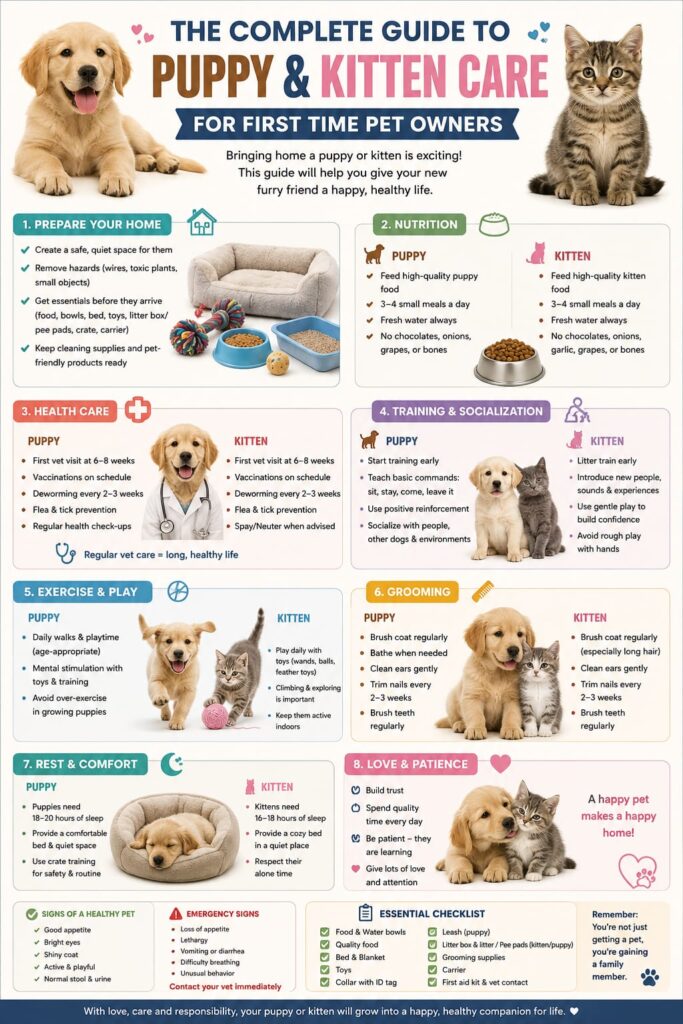
Puppy And Kitten Care is one of the most important responsibilities for first-time pet owners. Bringing home a new puppy And kitten Care is an exciting and rewarding experience, but it also comes with the responsibility of ensuring your furry friend grows up healthy, happy, and well-adjusted. Young pets require proper nutrition, regular veterinary care, training, socialization, and a safe environment to thrive. Understanding the basics of Puppy And Kitten Care can help you build a strong bond with your new companion while providing the best possible start in life.
When welcoming a puppy And kitten Care into your home, creating a comfortable and secure space should be a top priority. Your pet will need a cozy bed, clean water, nutritious food, and age-appropriate toys. Establishing a routine early helps them feel safe and confident in their new surroundings. Consistency in feeding, sleeping, and playtime is an essential part of effective Puppy And Kitten Care and can reduce stress during the adjustment period.
Nutrition plays a crucial role in the growth and development of young pets. Puppies and kittens have different dietary requirements than adult animals and need high-quality food formulated specifically for their age. Proper Puppy And Kitten Care includes feeding balanced meals that provide the vitamins, minerals, and nutrients necessary for healthy bones, muscles, and immune systems. Always consult your veterinarian to determine the best diet for your pet’s breed, size, and individual needs.
Regular veterinary visits are another key aspect of responsible pet ownership. Vaccinations, deworming treatments, and routine health checkups help protect your pet from common illnesses and ensure they stay healthy as they grow. Preventive healthcare is a fundamental part of Puppy And Kitten Care and can help identify potential health concerns before they become serious problems.
Training and socialization are equally important for raising well-behaved pets. Teaching basic commands, house training, and introducing your. The Compelete Guide For puppy And kitten Care For The Frist-Time To The Pet Owners. to different people, pets, and environments can help build confidence and good behavior. Through proper Puppy And Kitten Care, first-time pet owners can create a positive and loving environment that supports their pet’s physical and emotional well-being for years to come.
The first few months of a Puppies Or Kittens life are extremely important. During this stage, they grow rapidly, learn new behaviors, and develop habits that can affect their health and well-being throughout their lives. Providing proper Puppies or kittens the beginning helps build a strong foundation for a happy and healthy future.
Understanding your pet’s needs can make the transition smoother for both you and your new companion. In this guide, we will cover everything first-time pet owners need to know about caring for puppy including nutrition, healthcare, training, grooming, and safety.
Preparing Your Home Before Bringing a New Pet For Puppy
Before your puppy Or Kittens arrives, it is important to prepare your home to ensure their safety and comfort.
Create a Dedicated Space
Young pets need a quiet area where they can rest and feel secure.
Provide:
A comfortable bed
Food and water bowls
Toys
A safe sleeping area
Having a dedicated space helps pets adjust more easily to their new environment.
Remove Potential Hazards
Curious puppies and kittens often explore by chewing and investigating objects.
Remove or secure:
Electrical cords
Cleaning products
Medications
Small objects
Sharp items
Toxic plants
Pet-proofing your home reduces the risk of accidents and injuries.
Understanding the Nutritional Needs of Young Pets
Proper nutrition is one of the most important aspects of Puppies And Kittens
Growing pets require balanced diets that support:
Bone development
Muscle growth
Brain function
Immune system health
Feeding Puppies
Puppies Kittens need food specifically formulated for their growth stage.
Good puppy food should contain:
High-quality protein
Healthy fats
Vitamins and minerals
Essential nutrients
Most puppies require multiple small meals throughout the day.
Feeding Kittens
Kittens also require specially formulated kitten food.
Their diets should support:
Rapid growth
Energy needs
Healthy development
Fresh drinking water should always be available.
Establishing a Feeding Routine
Consistency helps young pets feel secure and supports healthy digestion.
Feeding Tips
Feed at the same times each day.
Follow portion recommendations.
Avoid excessive treats.
Monitor appetite and weight.
A predictable routine helps prevent overeating and digestive issues.
The Importance of Veterinary Checkups
Regular veterinary visits are essential during the first year of life.
A veterinarian can:
Monitor growth
Administer vaccinations
Provide deworming treatments
Detect health issues early
Offer nutritional guidance
Early veterinary care plays a major role in long-term health.
First Veterinary Visit
Schedule an examination shortly after bringing your new pet home.
This allows the veterinarian to assess overall health and create an appropriate healthcare plan.
Vaccinations and Preventive Care
Vaccinations protect young pets from serious diseases.
Common Puppy Vaccinations
Rabies
Distemper
Parvovirus
Hepatitis
Common Puppy And Kitten Care Vaccinations
Rabies
Feline Panleukopenia
Calicivirus
Rhinotracheitis
Vaccination schedules vary depending on age and local recommendations.
Keeping vaccinations current helps protect both your Puppy And Kitten Care and other animals.
Parasite Prevention
Young pets are especially vulnerable to parasites.
Common Parasites
Fleas
Ticks
Roundworms
Hookworms
Parasites can affect growth and overall health.
Prevention Tips
Follow deworming schedules.
Use veterinarian-recommended preventive products.
Maintain clean living spaces.
Routine parasite Control prevention is an important part of responsible pet ownership.
Training and Socialization
Training should begin early.
Young pets learn quickly and benefit from positive experiences.
Training Puppies
Basic commands may include:
Sit
Stay
Come
Leave it
Positive reinforcement methods work best.
Reward desired behaviors with praise and treats.
Socializing Puppies
Introduce puppies to:
Different people
New environments
Various sounds
Other vaccinated pets
Proper socialization helps prevent fear and behavioral problems later in life.
Socializing Kittens
Kittens also benefit from gentle exposure to different experiences.
Positive interactions help build confidence and reduce stress.
House Training For Your Puppy And Kitten Care
House training requires patience and consistency.
Helpful Tips
Establish a bathroom schedule.
Take puppies outside frequently.
Reward successful behavior.
Avoid punishment.
Most puppies learn more quickly when routines remain consistent.
Accidents are normal during the learning process.
Litter Training Your Kitten
Most kittens naturally learn to use a litter box.
Litter Training Tips
Place the litter box in a quiet location.
Keep it clean.
Make it easily accessible.
Positive encouragement helps kittens adapt more quickly.
Exercise and Playtime
Physical activity supports healthy growth and development.
Benefits of Exercise
Strong muscles
Healthy weight
Improved coordination
Mental stimulation
Fun Activities for Puppies
Fetch
Walks
Interactive toys
Fun Activities for Kittens
Feather toys
Climbing structures
Puzzle toys
Daily play sessions help prevent boredom and encourage healthy behavior.
Grooming Basics
Introducing grooming early helps pets become comfortable with handling
Grooming Tasks
Brushing
Nail trimming
Ear cleaning
Dental care
Regular grooming supports hygiene and overall health.
For You Dental Puppy And Kitten Care
Oral health should begin early.
Healthy dental habits help reduce the risk of:
Gum disease
Bad breath
Tooth problems
Use pet-safe dental products and seek veterinary guidance when needed.
Recognizing Signs of Illness
Young pets can sometimes become ill unexpectedly.
Warning Signs
Loss of appetite
Vomiting
Diarrhea
Excessive tiredness
Difficulty breathing
Weight loss
Prompt veterinary attention can prevent complications.
Always monitor changes in behavior and physical condition.
Creating a Safe Environment
Safety should remain a priority throughout your pet’s development.
Indoor Safety Tips
Secure windows and balconies.
Keep harmful substances locked away.
Supervise playtime.
Remove choking hazards.
Outdoor Safety Tips
Use secure fencing.
Supervise outdoor activities.
Prevent contact with dangerous animals.
A safe environment allows pets to explore confidently while reducing risk.
Building a Strong Bond With Your Pet
The relationship you develop during the early months can last a lifetime.
Ways to Strengthen Your Bond
Spend quality time together.
Use positive reinforcement.
Engage in daily play.
Provide affection and attention.
Trust and consistency help pets feel secure and loved.
Strong bonds contribute to better behavior and emotional well-being.
Common Mistakes First-Time Pet Owners Should Avoid
Many new pet owners unintentionally make mistakes.
Common Examples
Skipping veterinary visits
Overfeeding
Inconsistent training
Delaying vaccinations
Ignoring dental care
Lack of socialization
Learning from these mistakes can help ensure a healthier and happier experience.
Long-Term Benefits of Proper Early Care
Providing proper care during the first year helps create a strong foundation for lifelong health.
Benefits include:
Better physical health
Improved behavior
Stronger immunity
Increased confidence
Longer life expectancy
Early investments in healthcare and training often lead to long-term rewards.
Conclusion
Welcoming a puppy or kitten into your home is a wonderful experience that comes with important responsibilities. Proper nutrition, preventive healthcare, training, socialization, grooming, and safety all play essential roles in helping young pets grow into healthy and happy adults.
By understanding your pet’s needs and providing consistent care, you can create a positive environment that supports lifelong well-being. The time and effort invested during the early months can make a lasting difference in your pet’s quality of life.
At Paw Care Vet Clinic, we are committed to supporting first-time pet owners with expert veterinary care, preventive healthcare services, and professional guidance. Together, we can help your puppy or kitten enjoy a healthy, safe, and happy start in life.