

Introduction
Dogs love spending time outdoors, but parks, gardens, and grassy areas often expose them to fleas and ticks. These tiny parasites can cause itching, skin infections, allergic reactions, anemia, and even transmit dangerous diseases. Knowing how to Prevent Fleas in Dogs is one of the most important responsibilities of every pet owner.
A proactive approach that includes regular grooming, parasite prevention products, home hygiene, and veterinary care can significantly reduce the risk of flea and tick infestations. This guide explains everything you need to know to keep your dog healthy and parasite-free.
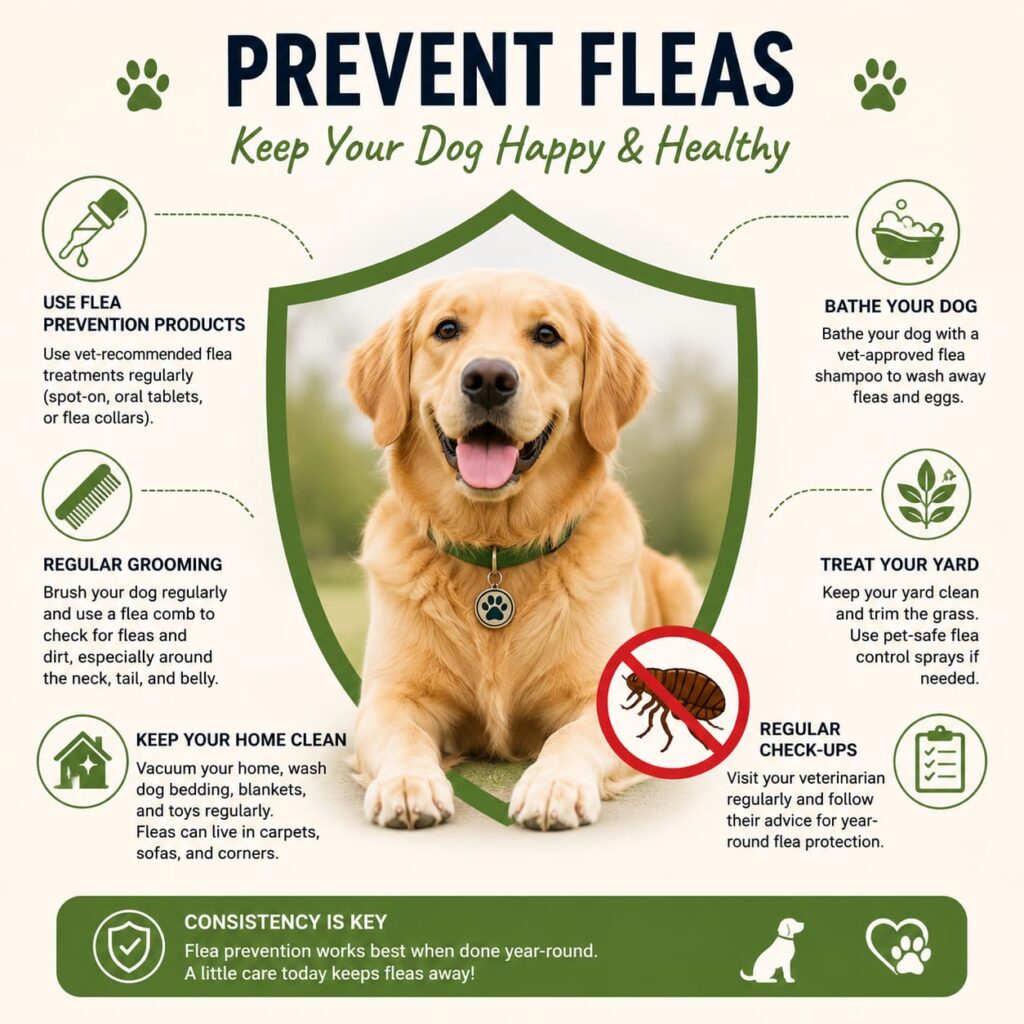
Why You Should Prevent Fleas in Dogs
Learning to Prevent Fleas in Dogs protects your pet from discomfort and serious health problems. Fleas reproduce rapidly, while ticks can spread diseases that affect both pets and humans.
Benefits of flea and tick prevention include:
- Reduces itching and skin irritation
- Prevents flea allergy dermatitis
- Lowers the risk of tick-borne diseases
- Protects your family from parasites
- Improves your dog’s overall health
- Prevents costly veterinary treatments
Common Signs Before You Prevent Fleas in Dogs
Recognizing early symptoms helps stop infestations before they become severe.
Watch for these signs:
- Excessive scratching
- Constant biting or licking
- Hair loss
- Red or inflamed skin
- Small black flea dirt on the coat
- Visible fleas or ticks
- Restlessness
- Pale gums in severe infestations
Prevent Fleas in Dogs with Regular Grooming
Routine grooming is one of the simplest ways to reduce parasites.
Good grooming habits include:
- Brush your dog’s coat several times a week.
- Use a flea comb to detect parasites.
- Bathe your dog with veterinarian-approved shampoo.
- Dry the coat thoroughly after bathing.
- Check hidden areas such as ears, neck, tail, and between the toes.
Regular grooming helps identify flea or tick problems early.
Prevent Fleas in Dogs Using Veterinary Treatments
Modern parasite-control products are highly effective when used correctly.
Your veterinarian may recommend:
- Monthly topical flea treatments
- Oral flea and tick medications
- Flea and tick collars
- Long-lasting parasite prevention products
- Prescription medications for high-risk areas
Never use medications intended for other animals without veterinary guidance.
Prevent Fleas in Dogs by Keeping Your Home Clean
Treating your dog alone is not enough because flea eggs can survive in the environment.
Maintain a clean home by:
- Vacuuming carpets frequently.
- Washing pet bedding weekly.
- Cleaning furniture and upholstery.
- Mopping floors regularly.
- Emptying vacuum bags immediately.
- Using veterinarian-approved environmental flea treatments if needed.
Clean surroundings reduce the chance of reinfestation.
Prevent Fleas in Dogs During Outdoor Activities
Ticks are commonly found in grassy fields, forests, and bushes.
Protect your dog by:
- Avoiding tall grass whenever possible.
- Staying on walking paths.
- Checking your dog after every outdoor walk.
- Removing ticks promptly with tweezers or a tick-removal tool.
- Keeping your yard trimmed and clean.
Outdoor inspections should become part of your daily routine.
Prevent Fleas in Dogs with Proper Yard Maintenance
A well-maintained yard discourages flea and tick populations.
Helpful practices include:
- Mow the lawn regularly.
- Remove leaf piles.
- Trim shrubs and bushes.
- Reduce standing water.
- Prevent wildlife from entering your yard.
A clean environment reduces parasite breeding areas.
Prevent Fleas in Dogs Throughout the Year
Many pet owners believe parasites are only active during summer. However, fleas can survive indoors throughout the year, while ticks remain active in many regions even during cooler months.
Year-round prevention provides the best protection and reduces recurring infestations.
Diseases You Can Help Prevent Fleas in Dogs From Spreading
Fleas and ticks can transmit several dangerous diseases.
These include:
- Lyme disease
- Ehrlichiosis
- Anaplasmosis
- Babesiosis
- Rocky Mountian Spootted Fever In Dogs
- Tapeworm infections
- Flea allergy dermatitis
- Skin infections
- Anemia in puppies
Early prevention is always better than treatment.
Natural Ways to Prevent Fleas in Dogs
Natural methods may support flea prevention but should not replace veterinary-approved products.
Helpful practices include:
- Regular bathing
- Frequent grooming
- Daily inspection of your dog’s coat
- Maintaining a clean home
- Keeping bedding clean
- Healthy nutrition to support immunity
Consult your veterinarian before using herbal or essential oil products, as some may be harmful to dogs.
Mistakes to Avoid When You Prevent Fleas in Dogs
Avoid these common mistakes:
- Skipping monthly flea prevention
- Ignoring tick checks after walks
- Treating only the dog and not the home
- Using expired medications
- Using products designed for cats
- Waiting until parasites become visible
Consistent prevention is far more effective than treating heavy infestations.
Conclusion
Learning how to Prevent Fleas in Dogs is essential for protecting your pet from parasites and the diseases they carry. A combination of regular grooming, veterinary-approved flea and tick prevention, home cleanliness, yard maintenance, and routine health checks offers the best defense against infestations. By following these preventive measures consistently throughout the year, you can keep your dog comfortable, healthy, and free from fleas and ticks.