
Introduction
Keeping your dog healthy starts with following the right Dog Vaccination Schedule. Vaccinations protect dogs from serious and life-threatening diseases while helping prevent the spread of infections to other pets and people. Whether you have a playful puppy or an adult dog, understanding the recommended vaccination timeline ensures your furry companion receives timely protection.
A proper Dog Vaccination Schedule begins early in a puppy’s life and continues with booster doses throughout adulthood. Working closely with your veterinarian helps ensure your dog stays protected based on its age, lifestyle, and local disease risks.
Why the Dog Vaccination Schedule Is Important
Following a Dog Vaccination Schedule is one of the most effective ways to prevent infectious diseases. Vaccines stimulate your dog’s immune system to recognize and fight harmful viruses and bacteria before they cause illness.
Benefits of vaccination include:
- Protects against life-threatening diseases.
- Strengthens your dog’s immune system.
- Reduces veterinary treatment costs.
- Helps prevent disease outbreaks.
- Protects other pets and people from certain diseases.
What Is a Dog Vaccination Schedule?
A Dog Vaccination Schedule is a planned timeline that tells pet owners when puppies and adult dogs should receive vaccinations. Puppies receive several vaccines because the immunity they receive from their mother gradually fades during the first few weeks of life.
Your veterinarian may adjust the schedule depending on your dog’s breed, health condition, travel history, and risk of exposure.
Core Vaccines In Dogs
Core vaccines are recommended for nearly every dog.
Vaccination Schedule for Rabies
Rabies is a fatal viral disease that affects both animals and humans. Vaccination is required by law in many regions.
Vaccination Schedule for DHPP Vaccine
The DHPP vaccine protects against:
- Distemper
- Hepatitis (Adenovirus)
- Parvovirus
- Parainfluenza
These diseases can be severe and are highly contagious.
Non-Core Vaccines in the Dog Vaccination Schedule
Some vaccines are recommended based on your dog’s lifestyle.
Examples include:
- Bordetella (Kennel Cough)
- Leptospirosis
- Lyme Disease
- Canine Influenza
Dogs that frequently visit parks, boarding facilities, grooming salons, or daycare centers may benefit from these vaccines.
Dog Vaccination Schedule for Puppies
The following is a general vaccination timeline.
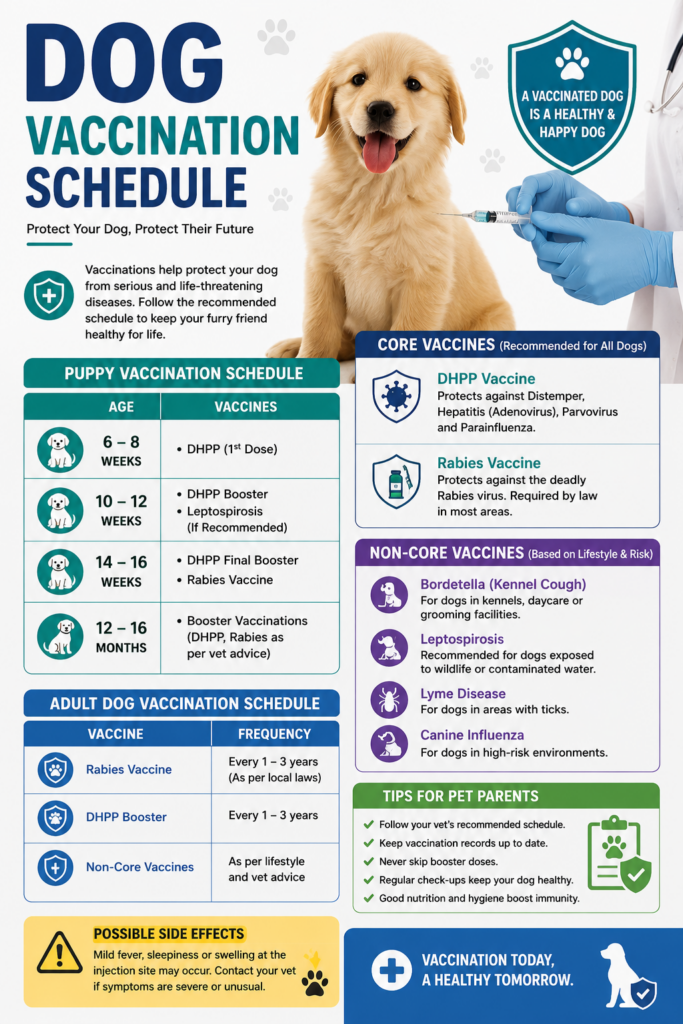
| Puppy Age | Recommended Vaccines |
|---|---|
| 6–8 Weeks | DHPP (First Dose) |
| 10–12 Weeks | DHPP Booster, Leptospirosis (if recommended) |
| 14–16 Weeks | DHPP Final Booster, Rabies |
| 12–16 Months | Booster Vaccinations |
Always consult your veterinarian because schedules may vary.
Dog Vaccination Schedule for Adult Dogs
Adult dogs require booster vaccinations to maintain immunity.
Typical schedule:
- Annual health examination
- Rabies booster as required by local regulations
- DHPP booster every one to three years
- Lifestyle vaccines based on exposure risk
Never skip booster doses because immunity decreases over time.
Diseases Prevented by the Dog Vaccination Schedule
A proper Dog Vaccination Schedule helps protect against:
- Rabies
- Canine Distemper
- Parvovirus
- Infectious Hepatitis
- Parainfluenza
- Leptospirosis
- Kennel Cough
- Lyme Disease
- Canine Influenza
Preventing these diseases is safer and less expensive than treating them.
Signs Your Dog May Need Veterinary Attention After Vaccination
Most dogs experience only mild side effects.
Common temporary reactions include:
- Mild fever
- Sleepiness
- Slight swelling at the injection site
- Reduced appetite for one day
Contact your veterinarian immediately if your dog develops:
- Difficulty breathing
- Severe vomiting
- Facial swelling
- Persistent weakness
- Collapse
- Severe allergic reactions
These reactions are rare but require immediate medical care.
Tips for Following the Dog Vaccination Schedule
To keep your dog’s vaccinations up to date:
- Keep a vaccination record.
- Never miss booster appointments.
- Schedule regular veterinary checkups.
- Avoid exposing unvaccinated puppies to unknown dogs.
- Follow your veterinarian’s recommendations.
- Maintain good nutrition and hygiene.
Common Mistakes to Avoid with the Dog Vaccination Schedule
Avoid these common mistakes:
- Delaying puppy vaccinations.
- Missing booster doses.
- Assuming indoor dogs don’t need vaccines.
- Vaccinating without veterinary advice.
- Forgetting annual wellness examinations.
Conclusion
Following the Dog Vaccination Schedule is one of the most important responsibilities of every dog owner. Timely vaccinations protect your dog from dangerous diseases, improve long-term health, and contribute to the safety of other pets and people. By maintaining regular veterinary visits, keeping accurate vaccination records, and following the recommended schedule, you can give your dog the best chance of living a long, healthy, and happy life.